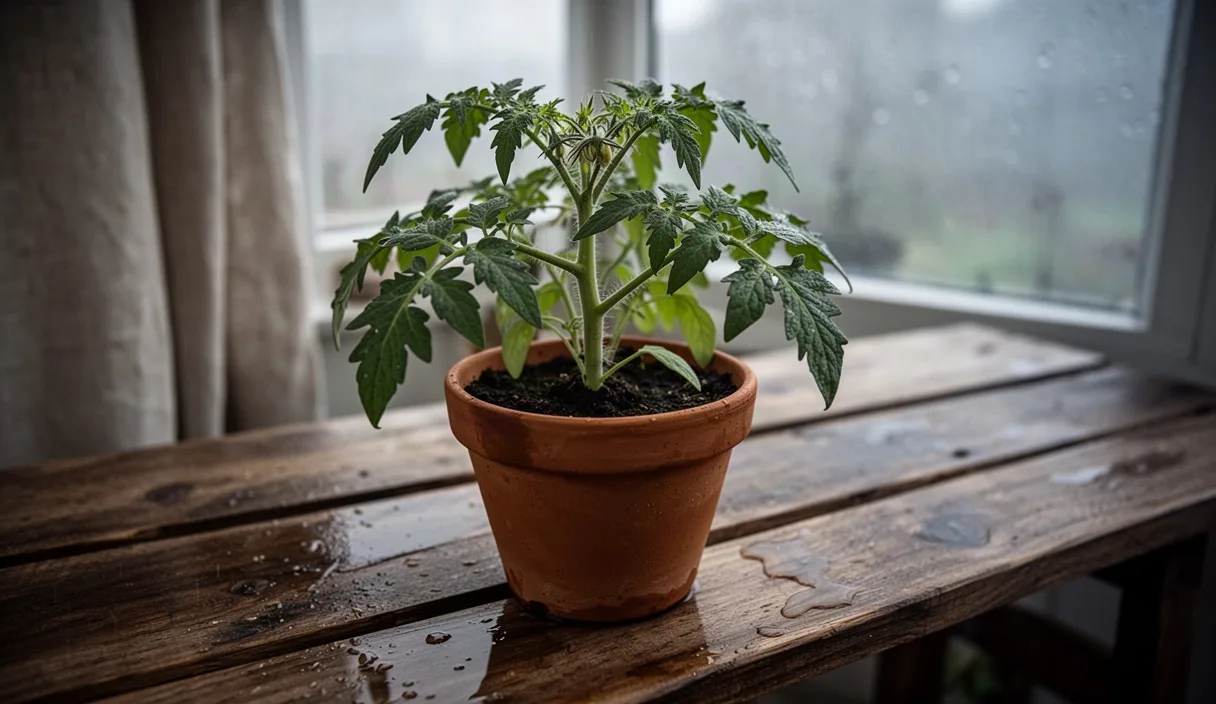
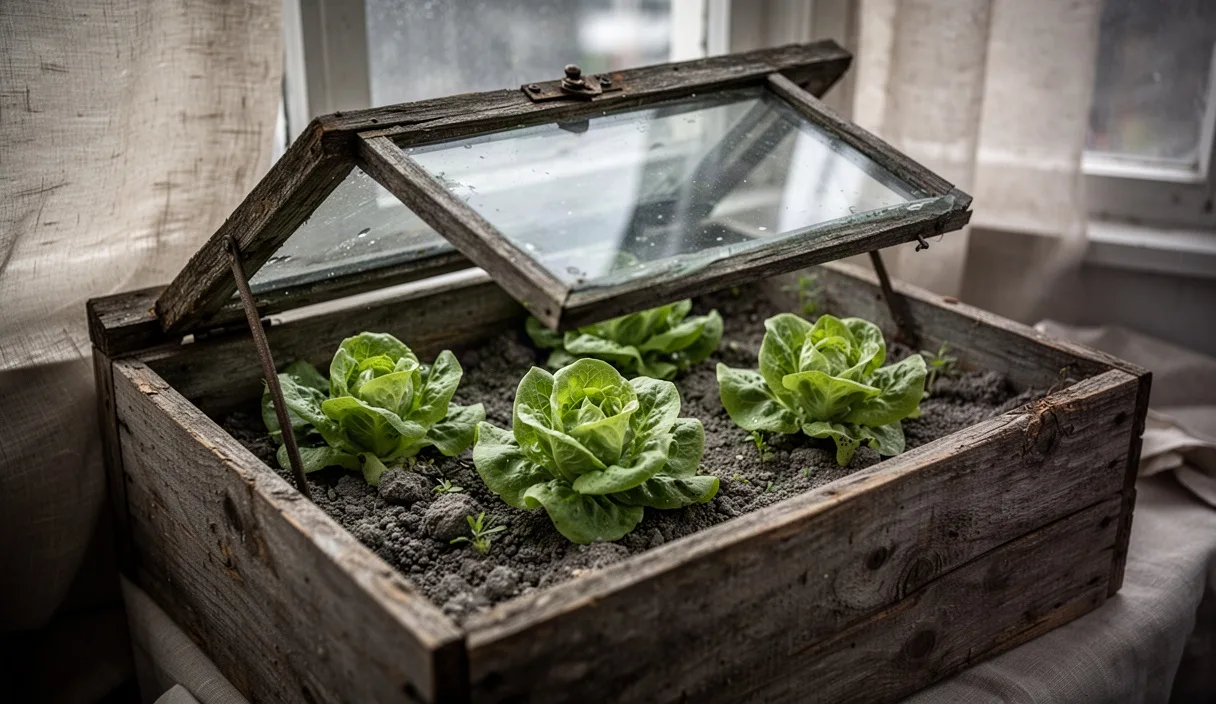
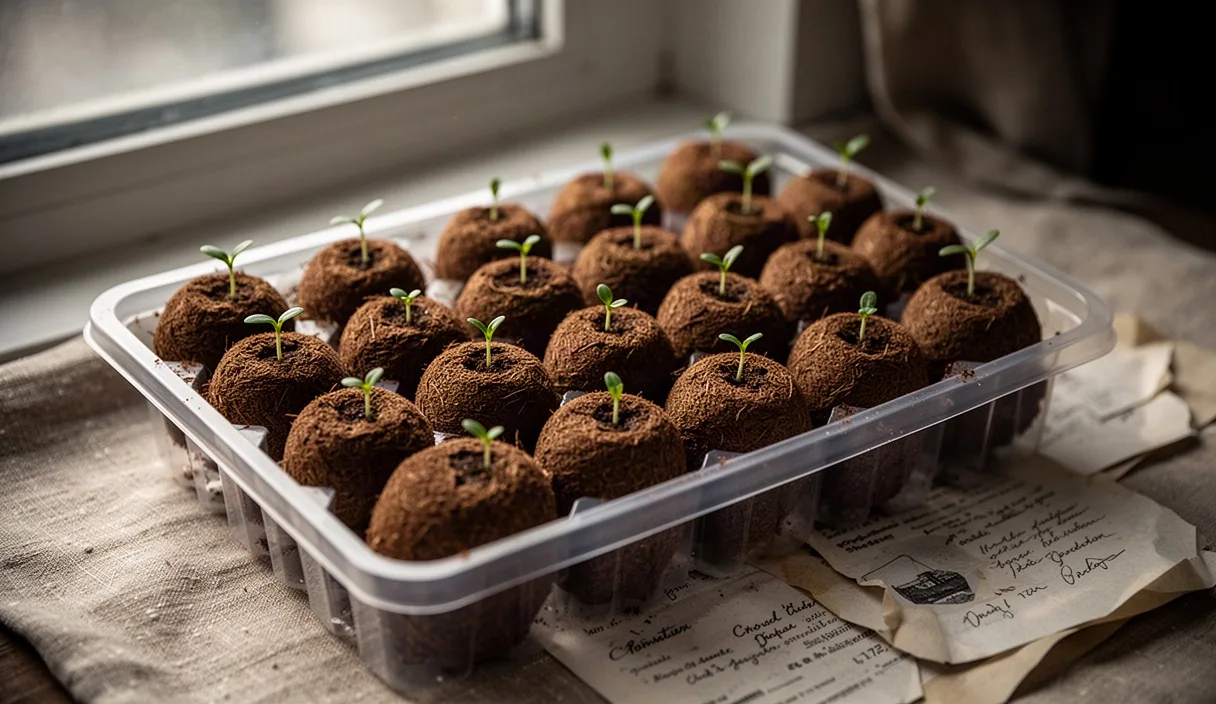
Late February and early March on our street bring a familiar sort of restless optimism. The radiator valves hiss under drafty Victorian sills, tea mugs leave pale rings on old newspapers, and plastic takeaway tubs or seed flats take over every south-facing window ledge in the house. We tuck our tomato seeds into warm, damp compost, dreaming of thick August trusses of 'Gardener's Delight' or 'Marmande'. Yet within ten days of germinating, that bright optimism often turns into pale, thread-like stems that lean hard against the glass, curving desperately toward grey morning skies before collapsing under the weight of their own seed leaves.
A leggy seedling is not simply an aesthetic nuisance; it is an early structural failure. When a young plant expends its finite seed energy stretching upward rather than laying down dense vascular tissue, its root system stalls, its hypocotyl becomes fragile, and its ability to take up water and nutrients suffers later in the allotment soil. Windowsills provide plenty of bottom heat from household heating, but in early spring, they rarely offer the radiant daylight required to match that warmth. Rescuing these starts demands quick observation, an understanding of plant photobiology, and a willingness to bring supplemental kit to bear before the stem snaps.
Recognizing early stem elongation in indoor flats
The process that turns a tomato start spindly is called etiolation. In nature, a seed germinating beneath fallen leaves or dense brush must race upward toward the canopy before its stored endosperm runs dry. In our sitting rooms, a tomato flat interprets low light combined with warm room temperatures as a canopy obstruction. The seedling floods its stem cells with auxin, a plant hormone that causes the cell walls to loosen and stretch lengthwise. Instead of producing thick, fibrous cellulose, the plant builds thin, water-bloated tubes that cannot bear their own weight once true leaves emerge.
Catching this habit early makes the difference between a salvageable flat and compost bin waste. Watch the hypocotyl, which is the pale portion of the stem sitting directly below the cotyledons (the first smooth seed leaves). A healthy tomato sprout should show a stout hypocotyl no longer than 15 to 25 millimetres within three days of surfacing. It should stand upright on its own, showing a faint purple or deep green blush near the soil line, caused by anthocyanin pigments that develop under strong light.
| Plant Metric |
Sturdy Seedling |
Elongated (Leggy) Seedling |
| Hypocotyl height at 5 days |
Under 25 mm |
40 to 75 mm or more |
| Stem coloration |
Dull purple or rich olive |
Translucent white or pale lime |
| Cotyledon stance |
Horizontal, cupped slightly upward |
Drooping, pointing flat toward glass |
| Stem diameter |
2 to 3 mm, stiff to touch |
Under 1 mm, bends under a misting |
If you notice the stems curving at severe 45-degree angles toward the glass pane, or if the stem cannot support the cotyledons after a gentle watering from below, the flat has already begun to stretch. The seedlings will soon develop long internodes, which is the distance between leaf sets. Long internodes delay flower cluster formation later in the season, pushing your first harvest back by several weeks.
Balancing windowsill warmth against actual daylight hours
The primary culprit behind spindly growth on a domestic windowsill is a severe mismatch between temperature and light volume. Tomato seeds require warmth to germinate, ideally around 21 to 24 degrees Celsius in the compost. Once the green loop breaks the surface, however, keeping the tray at that same temperature without an abundance of sun forces the plant metabolism into overdrive. The roots drink warmth and signal rapid cell division, but the leaves cannot capture enough photons to fuel the growth with sugars, so the seedling stretches.
Across northern latitudes in early spring, day length sits around ten to eleven hours, and much of that daylight is diffused through cloud cover, double glazing, and window grime. Modern double-glazed windows often filter out a notable portion of the photosynthetic active radiation (PAR) that plants crave. To keep the young stems stocky, you must reduce the ambient air temperature as soon as the majority of the seeds hook above the compost. Move them away from active heat registers or turn off propagation heat mats immediately.
- Daytime temperature target: Keep the room between 16 and 18 degrees Celsius when the sun is out, which slows vertical expansion while letting the plant photosynthesize cleanly.
- Nighttime temperature drop: Allow the flat to cool down to 13 to 15 degrees Celsius overnight. This natural drop mimics outdoor conditions, checking stem stretch and prompting stockier cellular walls.
- Tray rotation routine: Turn the tray 180 degrees every single morning at breakfast. If you leave the flat facing one direction for forty-eight hours, the hypocotyls will fix into an arch that is difficult to correct later during potting on.
Be wary of cold night drafts dropping the temperature right against the glass below 10 degrees Celsius. While cool air helps prevent stretch, prolonged cold mud encourages damping off, a fungal disorder caused by soil-borne pathogens like Pythium that causes the base of an elongated stem to rot and pinch off at compost level.
Adjusting bulb height as foliage expands
While an unassisted window can occasionally rear sturdy brassicas or leeks, it rarely delivers enough reliable energy for sun-loving Solanaceae like tomatoes. Supplementing with a modest fluorescent or LED grow light turns an unpredictable sill into a controlled propagation bench. You do not need commercial nursery rigs; a pair of standard T5 high-output fluorescent tubes or a wide-spectrum LED batten suspended on adjustable chains or cords over the sill will keep seedlings squat and dark green.
The critical factor with indoor grow lights is proximity. Light intensity drops off according to the inverse-square law: doubling the distance between the fixture and the foliage cuts the light intensity reaching the leaves down to a quarter of its former strength. Gardeners often hang a shop light high from the curtain pole, thinking it covers the whole sill, but at thirty centimetres away, the intensity is far too weak to arrest stem elongation.
- Initial emergence: Hang the light tubes just 5 to 7 centimetres above the cotyledons as soon as they emerge. With cool-running LED bars, you can often drop down to 4 centimetres without scorching tender leaf tips.
- Weekly height checks: Inspect the flats every two to three days. As the first true leaves push upward, raise the fixture click-by-click, maintaining that tight 5 to 8 centimetre gap between the bulb surface and the highest green tip.
- Photoperiod regulation: Plug the lighting into an inexpensive mechanical timer set for 14 to 16 hours of light per day, followed by an unbroken dark period of 8 to 10 hours. Plants need that dark rest period for respiration and root metabolism.
Test the heat level manually if you are using older T5 or T8 tubes. Hold the back of your hand against the top of the seedlings for thirty seconds; if you feel uncomfortable radiant heat, back the light off by 2 or 3 centimetres. Modern LEDs run far cooler, making them safer for tight setups over narrow window sills.
Simulating wind to trigger sturdy cell walls
Plants are dynamic structures that respond physically to mechanical stress, a biological phenomenon known as thigmomorphogenesis. In a garden bed, outdoor air currents bend and shake young stems constantly. This bending creates micro-strains in the outer stem layers, signaling the plant to release ethylene and distribute growth hormones laterally. The seedling responds by slowing vertical growth, expanding its stem diameter, and depositing rigid lignin within its xylem vessels to brace itself against the breeze.
On an indoor windowsill, the air is dead still. Protected from drafts, a tomato has no mechanical reason to build thick stems. You can artificially introduce this mechanical stress with a small desk fan or through simple physical handling every day.
- Oscillating electric fan: Place a small, low-wattage fan two metres away from the flat. Set it on its lowest speed and attach it to the same timer as your lights, running it for 15 to 30 minutes, two or three times across the day. The leaves should gently flutter, not whip violently.
- Hand brushing: If you do not have space for a fan on the sill, brush your open hand, palm down, back and forth across the tops of the seedlings. Ten to twelve gentle passes twice a day will mechanically stimulate the stems almost as effectively as an outdoor breeze.
- Cardboard card sweeping: Sweep a piece of heavy cardboard or folded newspaper lightly over the canopy. The movement should bend the stems no more than 20 to 30 degrees from vertical.
Never blast seedlings with continuous, high-speed dry air from a fan. Constant indoor air currents strip moisture from fragile cotyledons faster than underdeveloped root hairs can absorb it from the compost, leading to curled margins and stalled growth.
Burying stems during first transplanting
Even with careful lighting and regular brushing, a spell of dark, overcast weather can leave you with leggy starts by week three. Fortunately, tomatoes possess an exceptional survival trait that distinguishes them from capsicums or brassicas: adventitious root initials. Those tiny, pale bumps and fine hairs running along a tomato hypocotyl are dormant root nodes waiting for contact with moist soil to activate.
When the plants show their first set of true leaves, it is time to prick them out from crowded seed flats and move them into individual 7.5 or 9 centimetre pots. Use this potting-on window to reset the plant height by burying the elongated stem deeply in fresh potting compost.
- Prepare the containers: Fill your small pots roughly one-third full with a peat-free, free-draining potting compost, gently firming it to eliminate large air pockets.
- Lift the seedlings cleanly: Ease a blunt wooden plant label or kitchen fork under the root clump. Lift the plant only by its seed leaves (cotyledons), never by the vulnerable stem. Squeezing the stem crushes the internal vascular plumbing and invites fungal rot.
- Depth placement: Set the seedling deep into the pot so the root ball rests near the bottom. If the hypocotyl is exceptionally long (over 60 millimetres), angle the root ball slightly sideways so the stem slopes gently upward toward the rim.
- Fill and firm: Fill compost around the stem right up to the underside of the cotyledons, leaving about 5 to 10 millimetres of clearance below them. Firm gently with your thumbs to secure the stem upright.
- Water from below: Place the potted starts into a shallow tray of lukewarm tap water for twenty minutes until the top surface turns dark and moist, then remove to drain thoroughly.
Over the following seven to ten days, the submerged stem section will stop functioning as a trunk and begin generating a dense, fibrous web of secondary roots. This deeper foundation gives the tomato a significantly stronger root architecture, allowing it to draw more moisture and food once planted out in early summer.
Common mistakes
Gardeners often attempt to fix leggy tomatoes using techniques that actually make the problem worse. Avoiding these missteps protects your seedlings during their most vulnerable stage.
- Feeding seedlings nitrogen to strengthen them: Applying liquid tomato food or fish emulsion to an elongated seedling accelerates leafy green growth at the expense of root and stem density. The seedling shoots up even faster, becoming more fragile. Withhold liquid fertilizers until the plants have filled their first individual pots and carry several true leaves.
- Using transparent plastic pot covers too long: Humidity domes and cling film belong on seed trays only until the seeds sprout. Leaving covers on once the hypocotyl emerges traps excess heat and blocks airflow, triggering immediate stem stretch and fostering damping off fungus.
- Overwatering cold flats: Saturated compost deprives young roots of oxygen. Cold, wet soil restricts root development, meaning the plant cannot uptake phosphorus, evidenced by purple leaf undersides paired with weak, spindly stems. Let the compost dry slightly between waterings until the top surface turns a lighter shade of brown.
- Staking seedlings with matchsticks: Tying thread-thin seedlings to toothpicks or skewers does not build stem strength; it removes the mechanical need for the plant to hold itself up. Rely on deeper repotting and gentle air circulation instead of external props.
Practical next steps
If your window ledge is currently hosting a flat of pale, stretching green sprouts, take action today before the first true leaves expand and topple the hypocotyls.
Start by assessing your growing area right now. Measure the distance between the glass and your tray, and move the flat directly against the brightest window pane available, clear of thick curtain folds. If daytime room heating is running high, move the flat to an unheated bedroom, porch, or utility room that stays above 12 degrees Celsius but drops below 18 degrees Celsius during the day. This simple temperature drop halts auxin-driven elongation within twenty-four hours.
Next, gather supplies for potting on. You will need a stack of clean 7.5 or 9 centimetre pots, fresh multi-purpose potting compost, and a simple LED light strip if your windows continue to face grey spring drizzle. Once the first rough true leaves appear between the smooth cotyledons, prick out each seedling, lower the stem deep into the fresh mix right up to its neck, and settle the plants beneath your supplemental light source. By the time May arrives and garden beds warm up, those fragile window starts will have transformed into stocky, dark green plants ready for outdoor weather.
This publication provides general horticultural guidance only: consult your municipal extension office or a certified arborist for persistent orchard blights and soil contamination concerns. Disclaimer